Top 20 Exercises for Women: Glutes, Abs, HIIT & More
Fitness Tips
Oct 29, 2026 • 14min read
If you’re looking to build strength, improve endurance or feel more confident at the gym, you’re in the right place. There is no “one-size-fits-all” routine. The best exercises for women are the ones that support your goals, match your fitness level and keep you motivated.
A balanced workout routine can include strength training, cardio, core exercises and recovery. Whether you’re a beginner or simply looking to switch up your routine, these 20 exercises for women can help you build a stronger, more capable body.
BEST LEG & GLUTE EXERCISES FOR WOMEN
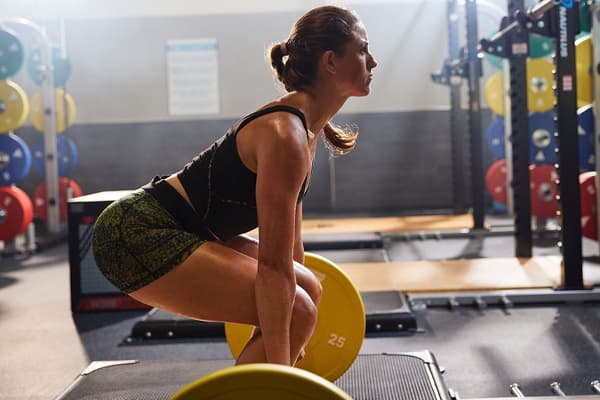
Lower-body exercises for women strengthen the glutes, quads, hamstrings and other muscles that support everyday movement. These four exercises can build lower-body strength and stability.
EōS members can also find specialized lower-body training equipment in the Booty Builder Lab, available at select locations.
1. Hip Thrust
Muscle Targets: Mainly the glutes, along with the hamstrings and core.
Why It’s a Staple: Hip thrusts are some of the best glute exercises for women because of the strong emphasis on working the glutes while making it easy to gradually increase resistance. Beginners can start with bodyweight or a dumbbell, while more experienced lifters can use a barbell or hip thrust machine to continue progressing.
How It’s Done: Sit on the floor with your upper back against a bench and your feet planted. Driving through your feet, lift your hips and squeeze your glutes at the top. Then, slowly lower yourself back down to the starting position.
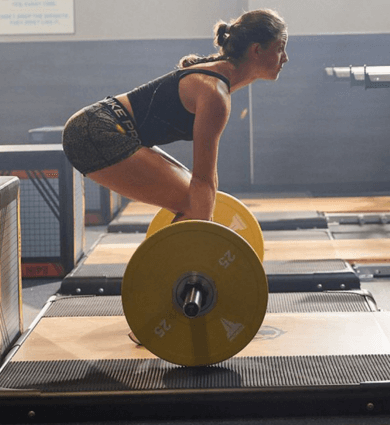
2. Romanian Deadlift
Muscle Targets: Hamstrings, glutes, and your back muscles.
Why It’s a Staple: Romanian deadlifts strengthen your posterior chain, targeting the glutes and hamstrings while you practice the hip-hinge movement pattern. They pair well with squat-based leg exercises for women and can be performed with dumbbells or a barbell as you build strength.
How It’s Done: Stand holding dumbbells or a barbell in front of your thighs. Push your hips back as you lower the weights along your legs, keeping your knees slightly bent. Lower the weight only as far as you can while maintaining a neutral spine and tension in your hamstrings. Drive your hips forward so you return to a standing position.
3. Split Squat
Muscle Targets: Your quads, glutes and hamstrings, while also building balance and stability.
Why It’s a Staple: Split squats are excellent leg exercises for women who want to build unilateral strength and balance. They train one side of the lower body at a time, building lower-body strength while letting each leg work independently.
How It’s Done: Start in a staggered stance, putting one foot forward and the other behind you. Bend both knees to lower your body, then drive through your front foot, keeping it planted and your torso controlled as you return to the starting position.
Make It Your Own: Begin with bodyweight, holding onto a stable surface for balance if needed. Add dumbbells for more resistance or elevate your rear foot to perform a Bulgarian split squat.
4. Goblet Squat
Muscle Targets: Quads, glutes and your core.
Why It’s a Staple: Goblet squats are one of the best leg exercises for women because they add resistance to a basic squat. Holding the weight at your chest can help reinforce an upright torso and controlled movement, making them a useful option for beginners and experienced lifters alike.
How It’s Done: Stand holding a dumbbell or kettlebell at chest height. Sit your hips down between your bent knees while keeping your chest lifted, then push through your feet to stand back up straight.
BEST UPPER BODY EXERCISES FOR WOMEN
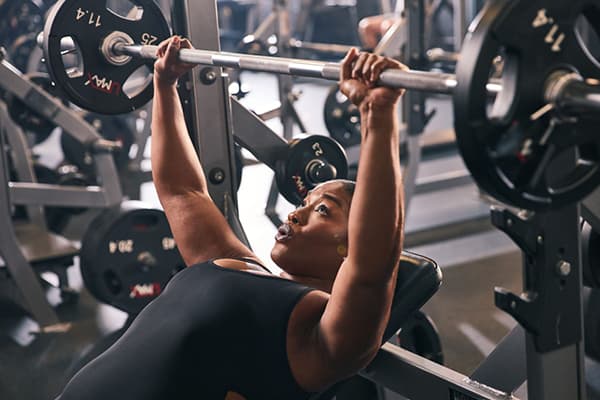
The best upper-body exercises for women target the back, chest, shoulders and arms. Combining pushing and pulling movements helps develop upper-body strength.
5. Lat Pulldown
Muscle Targets: The lats, biceps and your upper back.
Why It’s a Staple: The lat pulldown builds pulling strength while allowing you to control the resistance. The machine makes it a beginner-friendly option, while increasing the weight over time can help more experienced lifters continue to progress.
How It’s Done: Sit at the lat pulldown machine, gripping the bar slightly wider than your shoulders. Then, pull the bar toward your upper chest while driving your elbows down.
Make It Your Own: Start with a manageable weight and increase resistance as you progress. Experiment with different grip widths or attachments to find a comfortable pulling position.
6. Seated Cable Row
Muscle Targets: Lats, rhomboids, trapezius and biceps.
Why It’s a Staple: Seated cable rows are effective back exercises for women since they add a horizontal pulling movement to your workout, complementing the vertical pulling pattern of the lat pulldown. Seated cable rows are a staple for building strength throughout your middle and upper back.
How It’s Done: Sit at a cable row station with your feet supported. Pull the handle toward your torso while drawing your shoulder blades back, then slowly extend your arms.
Make It Your Own: Try different cable attachments, such as a close-grip handle or a wider bar. Start with a lighter weight to practice controlled movement before increasing resistance.
7. Dumbbell Shoulder Press
Muscle Targets: Deltoids and triceps.
Why It’s a Staple: The dumbbell shoulder press develops overhead pressing strength, and you can perform it seated or standing based on your preference or experience level.
How It’s Done: Hold a dumbbell in each hand at shoulder height. Brace your core while pressing the weights overhead until you extend your arms, then lower them under control.
8. Dumbbell Chest Press
Muscle Targets: Chest, shoulders and triceps.
Why It’s a Staple: Dumbbell chest presses are among the best chest exercises for women because you can work each arm independently using just a set of dumbbells to help you develop balanced strength.
How It’s Done: Lie on a flat bench with a dumbbell in each hand. Press the weights up over your chest, then slowly lower them to a comfortable range of motion.
Make It Your Own: Beginners can use a chest press machine for additional stability. Try an incline bench to change the emphasis or progress to heavier dumbbells as your strength improves.

BEST CORE & AB EXERCISES FOR WOMEN

Core exercises for women strengthen the muscles supporting the spine and pelvis. These movements can improve stability, posture and control during other workouts.
9. Bird Dog
Muscle Targets: Core, spinal stabilizers and glutes.
Why It’s a Staple: Bird dogs challenge stability to help develop balance and coordination from a hands-and-knees position. Because they require you to control opposite arm and leg movements, bird dogs can help build the stability you need for other strength exercises and everyday movement.
How It’s Done: Start on your hands and knees. Extend one of your arms forward and your opposite leg backward without rotating the hips. Go back to the starting position and switch sides.
10. Bicycle Crunch
Muscle Targets: Rectus abdominis and obliques.
Why It’s a Staple: Bicycle crunches bring together abdominal flexion and rotation as a dynamic addition to any core workout. Focus on controlled reps rather than rushing through the movement.
How It’s Done: Lie on your back, placing your hands lightly behind your head. Bring one knee to your chest and rotate your opposite shoulder toward it. Then alternate sides with control.
11. Hanging Leg Raise
Muscle Targets: Abs, hip flexors and grip muscles.
Why It’s a Staple: Hanging leg raises challenge core strength and control while requiring you to stabilize your body. They offer a more advanced alternative to floor-based abdominal exercises.
How It’s Done: Hang from a pull-up bar with your hands slightly wider than shoulder-width. Brace your core and raise your knees or legs without swinging. Slowly lower them to the starting position.
Make It Your Own: Start with bent-knee raises or use a Captain’s Chair, a common hanging leg raise machine, for additional support. Progress to straight-leg raises as your strength and control improve.
12. Cable Crunch
Muscle Targets: Rectus abdominis and other core muscles.
Why It’s a Staple: Cable crunches are a useful way to add resistance to core training, making them a good option for building abdominal strength as you progress. The adjustable cable weight also makes it easy to increase or decrease the challenge based on your experience level.
How It’s Done: Kneel facing a cable machine and hold the rope attachment near your head. Brace your core and curl your torso toward the floor, then slowly return to the starting position.
BEST BODYWEIGHT EXERCISES FOR WOMEN
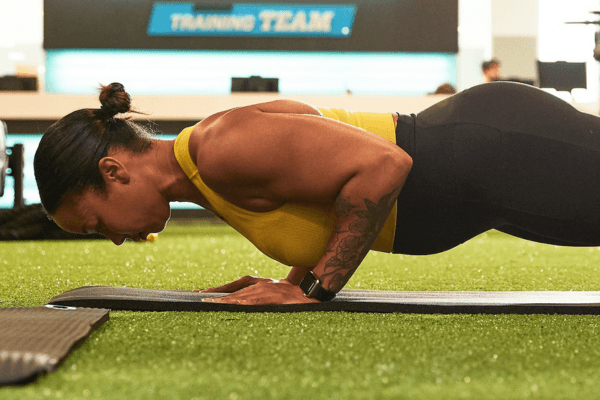
Bodyweight exercises for women require little to no equipment so that you can do them anywhere from the gym to the airport.
13. Bodyweight Squat
Muscle Targets: Quads, glutes, hamstrings and core.
Why It’s a Staple: Bodyweight squats develop your lower-body strength while reinforcing fundamental movement patterns. They’re a great addition to a leg day workout for beginners and can be progressed to goblet, dumbbell or barbell squats.
How It’s Done: Stand with your feet shoulder-width apart. Then, bend your knees and hips, lowering into a squat. Keep your feet planted to push through them to stand.
Make It Your Own: Start with chair squats if you need additional support. You can also try the leg press machine for a different way to target your lower body. Explore these 7 leg press variations for a total lower-body workout to switch up your routine.
14. Reverse Lunge
Muscle Targets: Quads, glutes and hamstrings.
Why It’s a Staple: Reverse lunges focus on unilateral leg training while improving your balance and coordination skills. Starting with bodyweight makes the movement accessible for beginners, while adding dumbbells can increase the challenge.
How It’s Done: Step one foot backward and lower both knees. Push through your front foot to return to standing, then repeat on the opposite side.
15. Push-up
Muscle Targets: Chest, shoulders, triceps and core.
Why It’s a Staple: Push-ups are an upper-body compound exercise that develops pushing strength while requiring core stability. They can be modified for a wide range of fitness levels.
How It’s Done: Begin in a high plank with your hands slightly wider than shoulder-width. Lower your chest toward the floor, keeping a strong body position, then press back up.
Make It Your Own: Beginners can perform incline push-ups with their hands on a sturdy elevated surface. Progress toward traditional push-ups as your strength improves.
16. Plank
Muscle Targets: Abs, obliques, shoulders and other core stabilizers.
Why It’s a Staple: Planks strengthen a variety of muscles, as they train your core to resist unwanted movement and maintain a stable position. They require no equipment and can be modified by adjusting the hold time or using a modified position.
How It’s Done: Place your forearms on the floor beneath your shoulders, extending your legs behind you. Brace your core and keep your body straight, without letting your hips drop.
Make It Your Own: Beginners can perform planks with their knees on the floor or shorten their hold time. Increase the duration or try alternating leg lifts for an additional challenge.
BEST HIIT EXERCISES FOR WOMEN

High-intensity interval training (HIIT) alternates challenging exercise intervals with recovery periods. The following HIIT exercises for women can improve cardiovascular fitness while engaging multiple muscle groups.
Looking for a new way to challenge yourself? Check out Fitness Unchained at EōS Fitness for a high-energy workout experience.
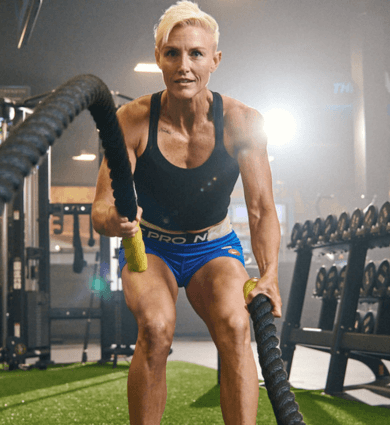
17. Battle Ropes
Muscle Targets: Shoulders, arms and core.
Why It’s a Staple: Battle ropes are good arm exercises for women because they combine upper-body movement with cardiovascular conditioning. Incorporate them into your HIIT circuits by alternating your arms, creating simultaneous waves or using different rope patterns.
How It’s Done: Stand with your knees slightly bent and hold one rope in each hand. Brace your core while maintaining a stable torso and move your arms rapidly to create waves with the ropes.
18. Kettlebell Swings
Muscle Targets: Glutes, hamstrings, core and back.
Why It’s a Staple: Kettlebell swings develop hip power by combining strength and conditioning. Instead of lifting primarily with your arms, the power should come from your hips.
How It’s Done: Hold a kettlebell with both hands, hinging at your hips. Allow the kettlebell to move between your legs, driving your hips forward to propel it up. Propel the kettlebell through the hip drive, instead of actively lifting with your arms. Let it return naturally into the next hip hinge.
Make It Your Own: Begin with a lighter kettlebell to learn proper hip-hinge mechanics. Gradually increase resistance or incorporate swings into timed intervals as your technique improves.
19. Sled Push
Muscle Targets: Quads, glutes, calves, core and shoulders.
Why It’s a Staple: Sled pushes combine full-body strength and cardiovascular conditioning. They challenge your lower body while requiring your upper body and core to maintain a stable pushing position.
How It’s Done: Load a sled with an appropriate amount of weight and grip the handles. Lean forward slightly, brace your core and drive through your legs to push the sled forward using controlled, powerful steps.
Make It Your Own: Beginners can start with a lighter load and shorter distances. Increase the weight, distance or number of intervals as your strength and conditioning improve.
20. Jump Squats
Muscle Targets: Quads, glutes, hamstrings and calves.
Why It’s a Staple: Jump squats add explosive movements to help build the power of your lower body while raising your heart rate and workout intensity.
How It’s Done: Lower into a squat, then drive through your feet to jump up. Land softly with knees bent and transition into the next rep.
Make It Your Own: Beginners or anyone looking for a lower-impact alternative can perform fast-paced bodyweight squats without jumping. Increase intensity by focusing on explosive, high-quality reps, with adequate recovery to maintain power output.
HOW OFTEN SHOULD WOMEN WORK OUT?
How often women should work out depends on their fitness level, goals, schedule and recovery needs.
A balanced weekly routine can include strength training at least twice a week, along with cardio and recovery days.
For general health, the Centers for Disease Control and Prevention (CDC) recommends that adults aim for about 150 minutes of moderate-intensity aerobic activity or 75 minutes of vigorous activity weekly, plus muscle-strengthening activities on two or more days.
If you’re just getting started, two or three workouts a week can be a manageable place to begin. From there, you can gradually increase your activity as your strength and endurance grow.
HOW TO CREATE A GYM WORKOUT PLAN FOR WOMEN
A balanced gym routine for women can include strength training, cardio, core work and recovery.
Start with two or three strength training sessions each week, choosing exercises that target all major muscle groups based on your experience, goals and schedule. Add cardio sessions based on your goals and preferences, whether that means walking on the treadmill, cycling, rowing or taking a group fitness class.
For example, a beginner-friendly schedule could look like this:
- Monday: Full-body workout
- Tuesday: Rest or light activity
- Wednesday: Cardio
- Thursday: Rest
- Friday: Full-Body Strength training
- Saturday: Optional cardio, core or group fitness
- Sunday: Rest
The best workout plan for women offers enough variety to support your goals while staying realistic and sustainable. Try building a balanced routine by choosing one or two exercises from each section that fit your goals instead of trying to complete the entire list.
BUILD YOUR WORKOUT AT EōS FITNESS
Whether you’re beginning your fitness journey or exploring new ways to challenge yourself, EōS Fitness offers equipment, classes and support to help you build a routine that works for you.
Explore group fitness classes for strength, cardio and full-body conditioning or work with a personal trainer to develop a program tailored to your experience level and goals.
New members can also take advantage of the Welcome Workout, a complimentary one-on-one session with a certified personal trainer designed to help you assess your starting point, discuss your goals and build a personalized workout plan.
Ready to find your fit? Explore EōS with a Free 7-Day Pass and discover the workouts, equipment and fitness community that keep you moving.
FAQs
What are the best exercises for women?
The best exercises for women depend on your goals. Squats, Romanian deadlifts, rows, chest presses and planks are good for strength training, while walking, cycling and HIIT can support cardiovascular fitness.
How many times a week should a woman do strength training?
Beginners may start with two or three strength training sessions per week, depending on their experience and goals. Allow adequate recovery between challenging workouts targeting the same muscle groups.
Are HIIT workouts good for women?
HIIT can be an effective way to build cardiovascular fitness in less time. Beginners should start with shorter intervals and appropriate recovery periods. Low-impact alternatives can help make HIIT more accessible.
Is strength training good for women?
There are many benefits of strength training for women. Strength training can help women build muscle, develop functional strength and support overall physical health. It can also contribute to maintaining bone health as part of an active lifestyle.
Can women do strength training and cardio together?
Yes, combining strength training and cardio supports muscular strength and cardiovascular fitness. You can do both in the same workout or schedule them on separate days, depending on your goals and recovery needs.
What is the best workout for women at the gym?
The best workout exercises for women depend on individual goals but can combine lower-body exercises, upper-body movements, core training and cardio. Beginners can start with a manageable schedule and gradually increase their activity as their fitness improves.