
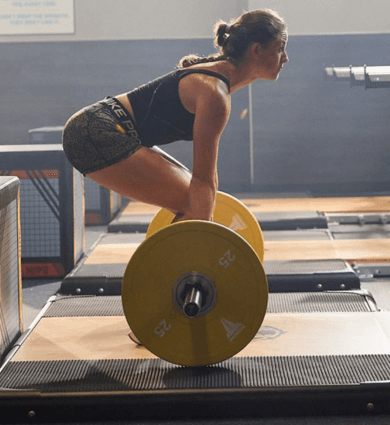
How to Do a Deadlift: Proper Form & Tips
Fitness Tips
Oct 12, 2026 • 8min read
If you’re looking to build strength, improve athletic performance and get more out of your workouts, the deadlift is one of the best exercises to learn. A deadlift works multiple muscle groups at once and is a basic component of strength training. But to get the full benefits without injuring yourself in the process, you need to master proper deadlift form.
In this guide, we’ll break down everything you need to know about how to do a deadlift, including tips on proper deadlift form and variations you can try once you’ve mastered the basics.
WHAT IS A DEADLIFT?
A deadlift is an exercise where you lift a weighted barbell (or some other type of resistance) from the ground to a standing position by hinging at the hips. Deadlifts primarily target your posterior chain, including your glutes, hamstrings, lower back, core, lats and upper back.
Because it engages so many muscle groups in your lower body, deadlifts offer many benefits, like improved posture and enhanced athletic performance. For anyone getting into strength training, learning how to do a deadlift is a great foundation for getting started.
HOW TO WARM UP FOR DEADLIFTS
Before you even start a deadlift, it’s important to warm up to prepare your muscles and reduce your risk of injury.
Some warm-ups for deadlifts include:
- 5–10 minutes of light cardio, such as walking or cycling
- Dynamic stretches like hip circles and leg swings
- Activation exercises such as glute bridges and bodyweight squats
- Gradual warm-up sets with lighter weights
If you’re new to lifting, try a Welcome Workout where a trainer can walk you through proper movement patterns and techniques to help you build a strong foundation for the deadlift.
THE BASICS: STEP-BY-STEP ON HOW TO DO A DEADLIFT
The deadlift begins with the traditional barbell deadlift variation. If you want to learn how to do a barbell deadlift, you need to start with the basics: focusing on technique.
Here’s a step-by-step breakdown on how to perform proper deadlift technique:
- Stand with your feet shoulder-width apart, positioning the barbell over the middle of your feet.
- Bend at your hips and knees and reach for the bar. Place your hands just outside your legs with a firm grip, either overhand or underhand, whichever feels best. .
- Lift your chest while keeping your spine neutral and shoulders slightly in front of the bar, not behind it.
- Engage your core as if you’re bracing for impact. This step is one of the most important, as it helps protect your lower back.
- Push through your heels, extending your knees and hips simultaneously to lift the bar.
- At the top of the movement, your body should form a straight line from head to heels, so keep that in mind to avoid leaning back or overextending.
- Lower the bar by hinging at the hips.
- Then bend your knees once the bar passes them and return the bar to the ground, finishing back in the starting position.
Tips on Proper Deadlift Form
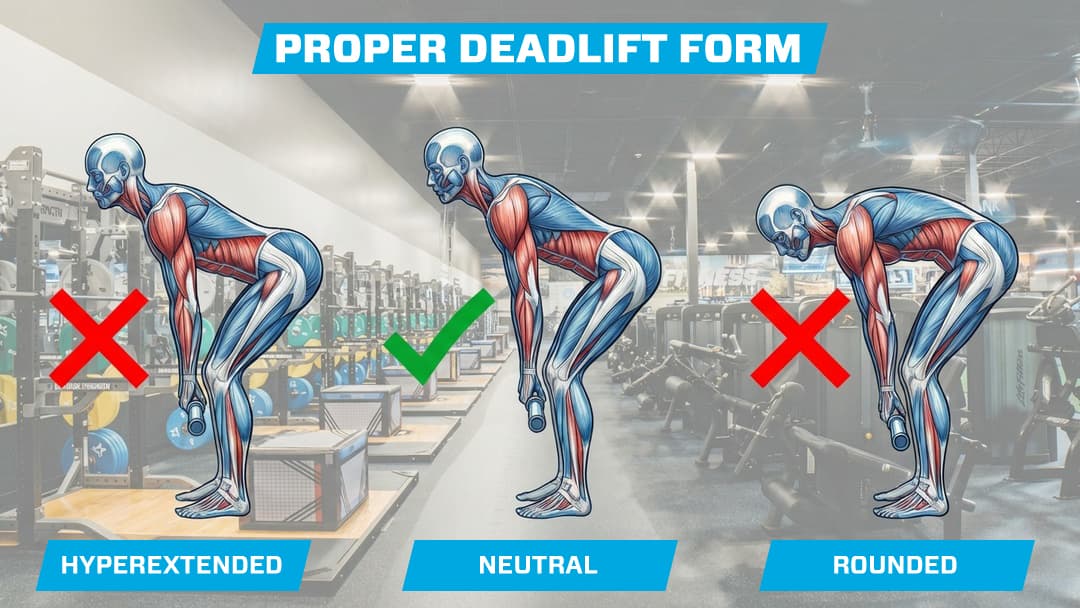
Maintaining proper deadlift form is critical to getting the most out of every lift and staying injury-free.
Here are a few key tips to help you perform a proper deadlift:
- Keep the bar close to your body throughout the entire lift
- Maintain a neutral spine, which means no rounding or excessive arching
- Push the floor away rather than pulling the bar up
- Move in a controlled, steady motion
If you’re just starting out, use lighter weights to prioritize technique and build consistently without injury. And don’t be afraid to ask an expert personal trainer for guidance on how to deadlift properly, or start by adding it to a more structured push-pull routine. Training in a dedicated weight-lifting area like The Set at EōS Fitness can also help you learn additional tips and tricks for the perfect deadlift form.
DEADLIFT FORM VARIATIONS YOU CAN TRY
Once you’ve mastered the standard deadlift, adding variations like the trap bar deadlift or kettlebell deadlift can help you build strength more effectively, target different muscle groups and avoid workout plateaus.
Below are more details on the different types of forms you can try out to take your strength training up a notch:
How to Do Deadlifts with Dumbbells
Learning dumbbell deadlift form is a great way to build strength while improving balance and control. This dumbbell variation is especially beginner-friendly and helps reinforce proper dumbbell deadlift form.
All you need to do is:
- Stand with your feet hip-width apart.
- Hold a dumbbell in each hand at your sides or in front of your thighs.
- Set your posture by keeping your chest up, shoulders back and core engaged.
- Bend your knees, push your hips back and lower the dumbbells down the front of your legs.
- Lower the dumbbells to the floor, keeping your back flat and the dumbbells close to your body.
- Push through your heels while driving your hips forward. At the top, squeeze your glutes.
- Return to the starting position and repeat!
How to Do a Romanian Deadlift (RDL)
Romanian deadlift form focuses on your hamstrings and glutes while reinforcing proper hip hinge mechanics. You can also perform a dumbbell Romanian deadlift if you prefer using dumbbells over a bar. The only difference with dumbbell RDL form is the equipment. The key to proper dumbbell Romanian deadlift form is maintaining alignment, control and a strong hip hinge.
If you want to stick with the more traditional Romanian deadlift form:
- Stand with your feet hip-width apart and position the bar over your shoelaces.
- Grip the bar just outside your hips using a double overhand grip.
- Lift the bar to a standing position with your hips and knees fully extended.
- Push your hips back, hinging forward and lowering the bar as far as your mobility allows while maintaining a neutral spine (usually around mid-shin).
- Keep a neutral spine and the bar close to your body throughout the movement.
- Drive through your feet to return to standing and repeat.
How to Deadlift on a Smith Machine
A Smith machine deadlift offers a controlled bar path, making it great for beginners as they learn proper technique, or for more experienced lifters who want to go back to the basics.
To do a Smith machine deadlift:
- Set the bar to its lowest position with safety catches in place.
- Stand with feet hip-width apart, positioning the bar over your midfoot.
- Grip the machine’s bar just outside your legs with an overhand or mixed grip.
- Lower your hips while keeping your chest lifted and spine neutral.
- Push through your heels, lifting the bar to extend your knees and hips together.
- Stop at a neutral standing position, and avoid leaning back at the top.
- Lower your bar by hinging at the hips.
- Now just rinse and repeat as needed!
How to Do a Single-Leg Deadlift
Mastering single-leg deadlift form improves balance, coordination and unilateral strength while targeting your glutes and hamstrings.
Here’s how to do a single-leg deadlift:
- Stand with feet hip-width apart, shifting your weight onto one leg.
- Extend your opposite leg behind you, keeping your hips and shoulders square.
- Hinge at the hips, lowering your torso until it’s nearly parallel to the floor.
- Slightly bend your working knee as you descend, and stop once your hips no longer can remain square.
- Keep engaging your core and stabilizing your standing leg.
- Return to standing in a controlled motion.
How to Do a Sumo Deadlift
The sumo deadlift form emphasizes the hips, glutes, quads and adductors due to the wider stance.
If you want to target these leg muscles with the proper sumo deadlift form, you need to:
- Stand with feet wider than shoulder-width apart, turning your toes outward.
- Hinge your hips while bending your knees to grip the bar inside your legs.
- Keep your chest up and your shins nearly vertical.
- Engage your core and push through your feet to lift the bar.
- Fully extend your hips and knees, then squeeze your glutes at the top.
- Slowly lower the bar by hinging at the hips.
How to Do a Stiff-Leg Deadlift
The stiff-leg deadlift form primarily targets your hamstrings by limiting knee bend and emphasizing the hip hinge.
To activate your hamstrings with the stiff-leg deadlift form, you need to:
- Stand with feet hip-width apart and the bar positioned over your shoelaces.
- Push your hips back and hinge forward, keeping your legs mostly straight. Make sure you don’t accidentally lock your knees; keep them slightly bent.
- Grip the bar with a shoulder-width, double overhand grip.
- Maintain a neutral spine while keeping the bar close to your body.
- Drive through your feet to stand up, extending your hips.
- Reverse the movement with control and repeat.
BUILD STRENGTH SAFELY WITH PROPER DEADLIFT FORM
If you’re ready to take your strength training to the next level, explore all the amenities EōS Fitness offers, like Personal Training, to help you reach your goal of mastering how to do deadlifts.
Not sure if EōS is the right fit for you?
The 7-Day Free Gym Trial gives you the chance to try out all we have to offer so you can see how we can help you reach your fitness goals.
FAQS ABOUT HOW TO DO A DEADLIFT
How much should I be able to deadlift?
There’s no set amount you should be able to deadlift, as it mainly depends on your body weight, experience level and training consistency. The main focus when performing deadlifts should be mastering proper deadlift form, as progression and technique matter more than hitting a specific number.
How can I improve my deadlift form?
You can improve your deadlift form by maintaining a neutral spine, keeping the bar close to your body and driving through your heels. Recording your lifts or working with a trainer can help identify issues and improve your technique over time.
How to improve grip strength for a deadlift?
To improve your grip strength for deadlifts, focus on using a double overhand grip during warm-ups, incorporating exercises like farmer’s carries and dead hangs and adding grip-strength tools to your routine.