8 Best Forearm Exercises for Strength and Muscle
Fitness Tips
Nov 16, 2026 • 11min read
Strong forearms do more than fill out your sleeves. They power your grip, support upper-body lifts and help with everyday tasks like carrying groceries and opening jars.
If you’ve been looking for forearm exercises that help build strength and muscle, you’re in the right place.
Below we’ll walk through eight of the best exercises, break down the muscles involved and cover how to put these exercises together into a forearm workout routine.
WHAT MUSCLES ARE IN YOUR FOREARM?
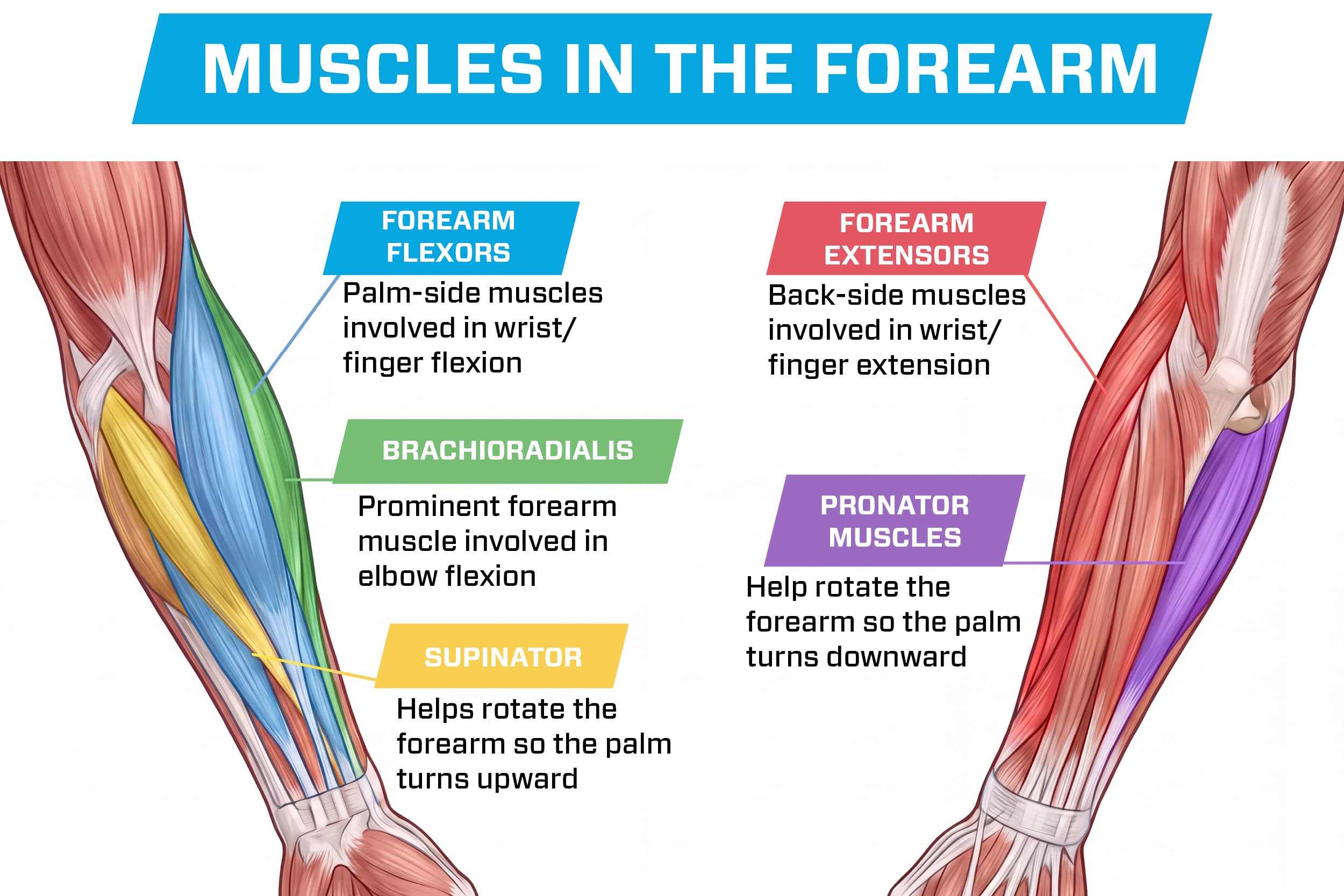
Your forearm is made up of several muscles and muscle groups that work together to move your wrist, hand and fingers. Understanding them helps explain why a little variety goes a long way.
There are two main muscle groups in your forearms: the flexors and extensors. The flexors run along the palm side and help bend your wrist and fingers, while the extensors run along the back and help straighten them. Another key muscle, the brachioradialis, runs along the forearm and helps bend your elbow.
Other muscles, including the pronators and supinators, help rotate your forearm to turn your palm downward or upward.
Together, these muscles handle different jobs, so the best forearm workout includes a variety of exercises that target different functions, from wrist control to grip.
BEST FOREARM EXERCISES
Here are eight of the best forearm gym exercises, each targeting your muscles in a slightly different way. Together they can help you build a balanced forearm workout, whether you’re a beginner or an experienced lifter.
1. Wrist Curls
Wrist curls, sometimes called forearm curls, are a simple, beginner-friendly move that directly targets your forearm flexors.
How to Perform Wrist Curls:
- Hold a dumbbell in each hand and sit on a bench
- Rest your forearms on your thighs with your palms facing up and let your wrists hang just past your knees
- Curl the weight upward using only your wrists
- Lower it back down slowly and with control
Recommended Reps: 2-3 sets of 12-15 reps
Wrist curls are easy to set up and isolate the flexors, making them a good starting point for beginners. You can also perform them with a barbell.
2. Reverse Wrist Curls
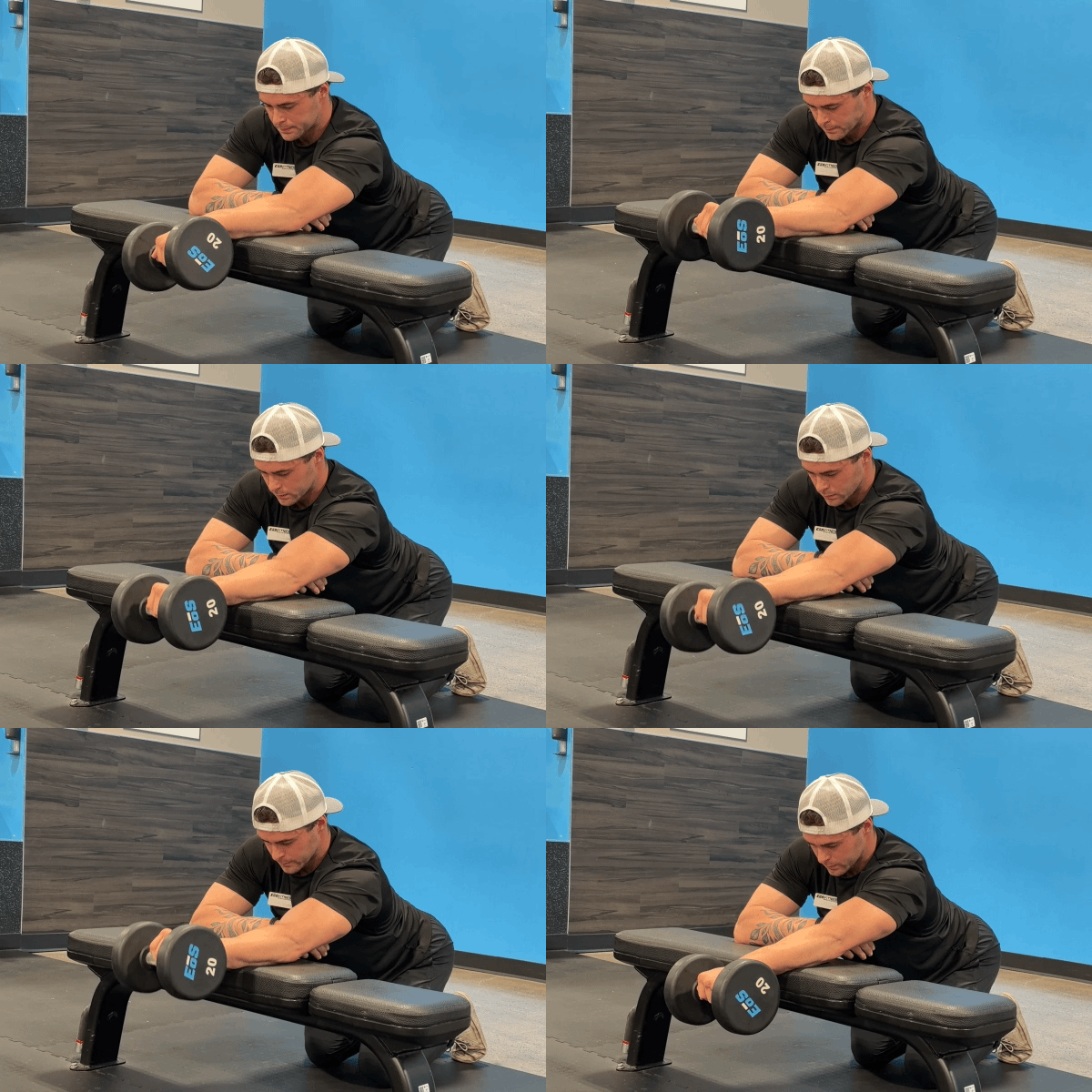
Flip your grip and put your forearm extensors to work. Reverse wrist curls are performed with your palms facing down, making them a great complement to standard wrist curls for more balanced forearm training.
How to Perform Reverse Wrist Curls:
- Rest your forearms on your thighs or a bench with your palms facing down
- Hold a dumbbell in each hand with your wrists hanging just past your knees
- Raise the weight upward by extending your wrists
- Lower it back down slowly
Recommended Reps: 2-3 sets of 12-15 reps
Pairing reverse wrist curls with standard wrist curls keeps your training balanced across both sides of the forearm.
3. Hammer Curls
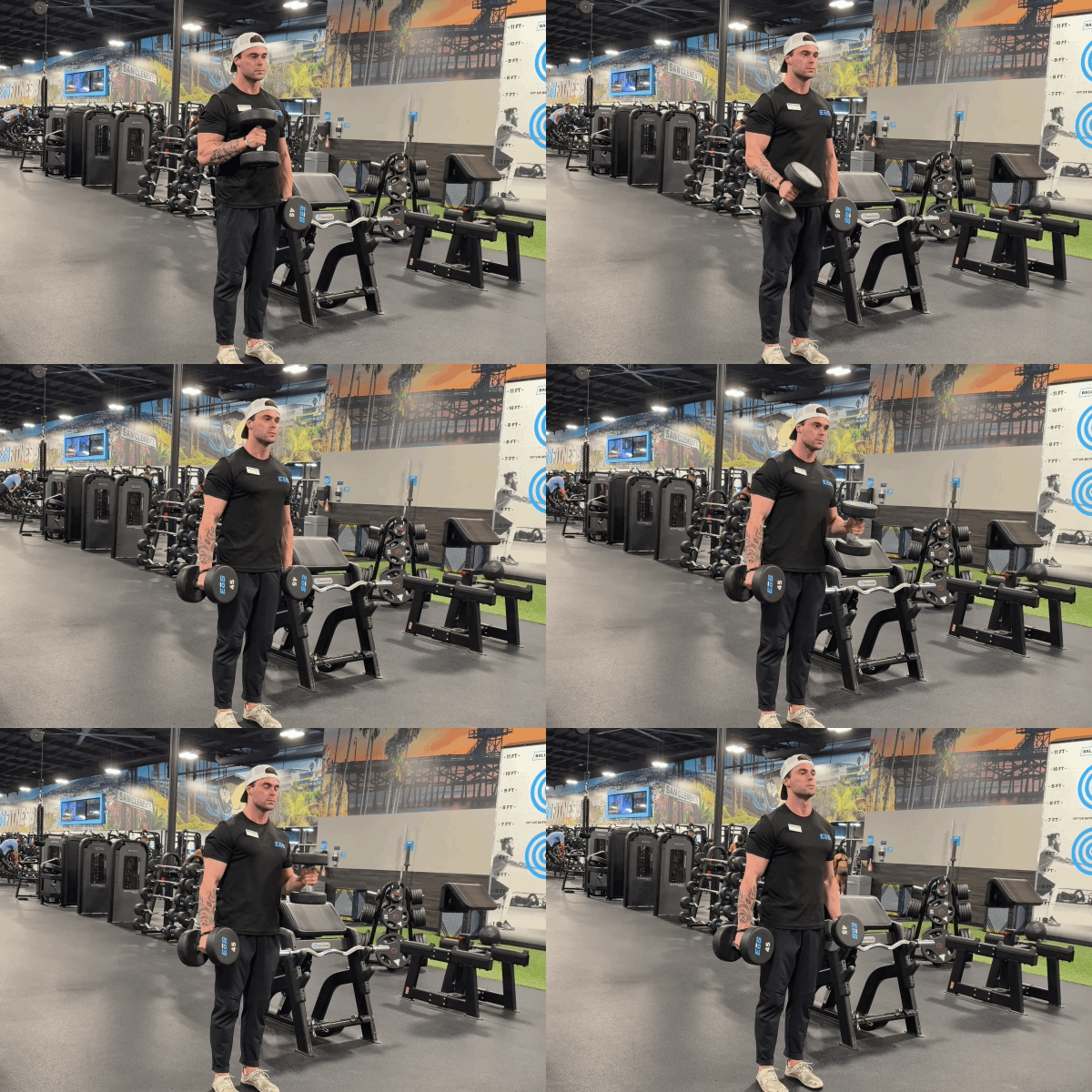
Holding dumbbells with a neutral grip (palms facing each other), you’ll work your biceps along with the brachialis and brachioradialis, a major forearm muscle.
How to Perform Hammer Curls:
- Stand tall holding a dumbbell in each hand with a neutral grip, palms facing each other
- Keep your elbows close to your sides
- Curl the weights toward your shoulders, keeping your palms facing each other throughout.
- Lower them back down with control
Recommended Reps: 2-3 sets of 10-12 reps
Hammer curls build forearm and upper-arm strength in the same movement, making them an efficient addition to any arm day.
4. Reverse Curls
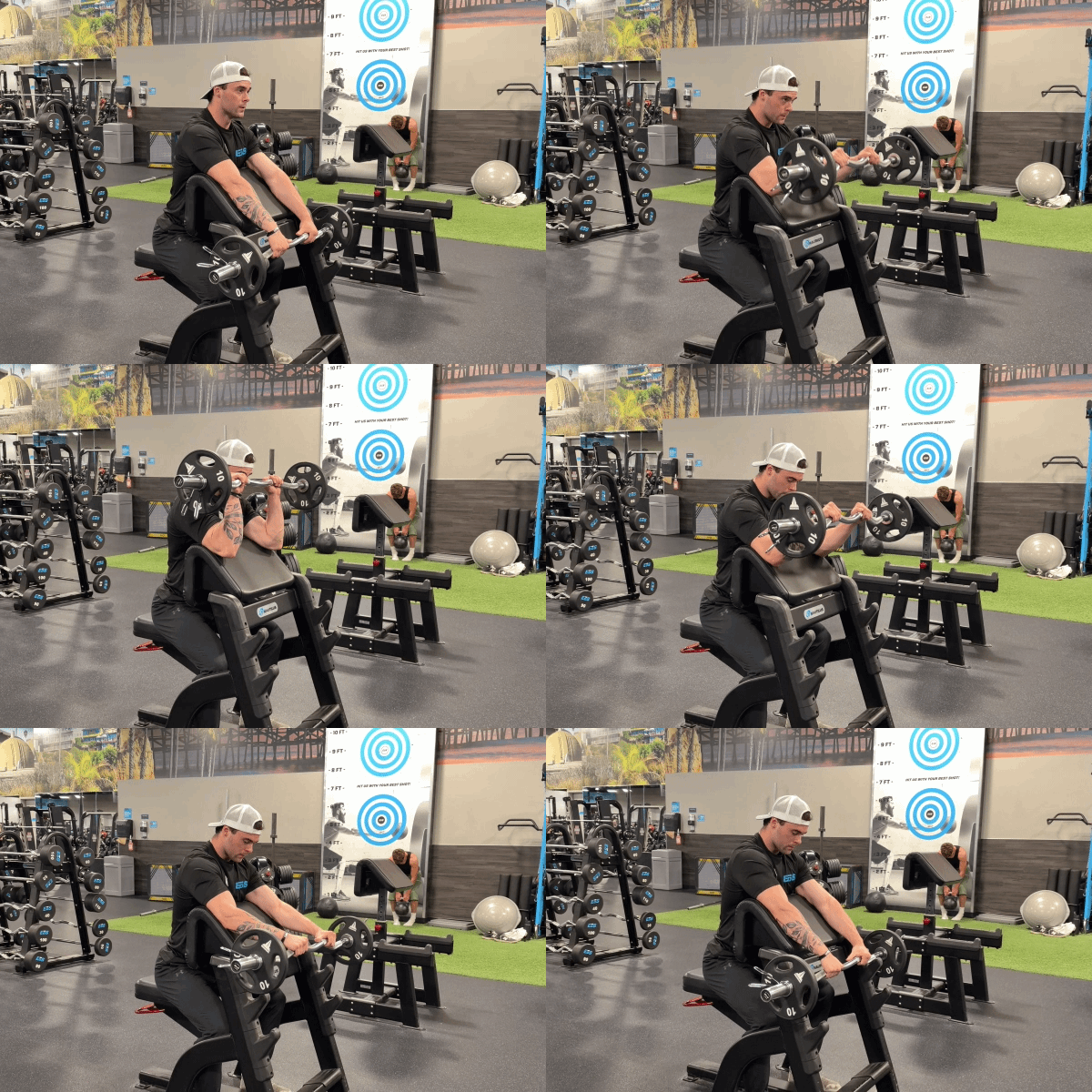
Similar to a standard curl but with an overhand grip, reverse curls place greater emphasis on your forearms and brachioradialis.
How to Perform Reverse Curls:
- Stand tall holding a barbell or EZ-bar with an overhand grip, palms facing down
- Keep your elbows tucked close to your sides
- Curl the bar toward your shoulders
- Lower it back down slowly
Recommended Reps: 2-3 sets of 10-12 reps
Because the overhand grip is more challenging, you’ll likely use less weight here than on a standard curl.
5. Farmer’s Carry
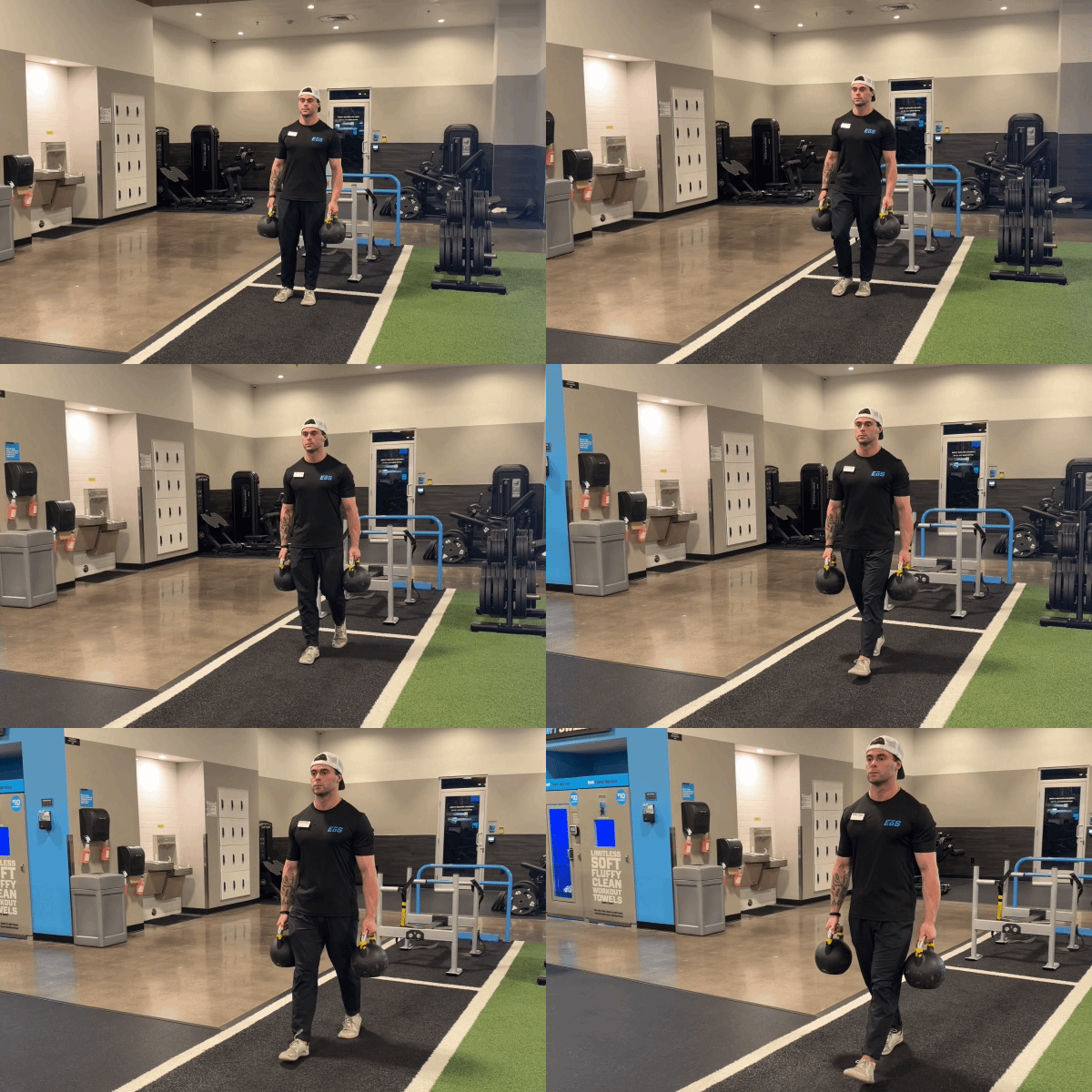
This is one of the best moves for grip strength and forearm endurance. It’s simple, effective and easy to do at any EōS location.
How to Perform the Farmer’s Carry:
- Grab a heavy dumbbell or kettlebell in each hand
- Stand tall with your shoulders back and core braced
- Walk a set distance with slow, controlled steps
- Set the weights down, rest, then repeat
Recommended Sets: 2-3 rounds of 30-40 yards, or carry for 30-45 seconds
Keep your posture upright throughout so the work stays in your grip and forearms rather than your lower back.
6. Wrist Roller
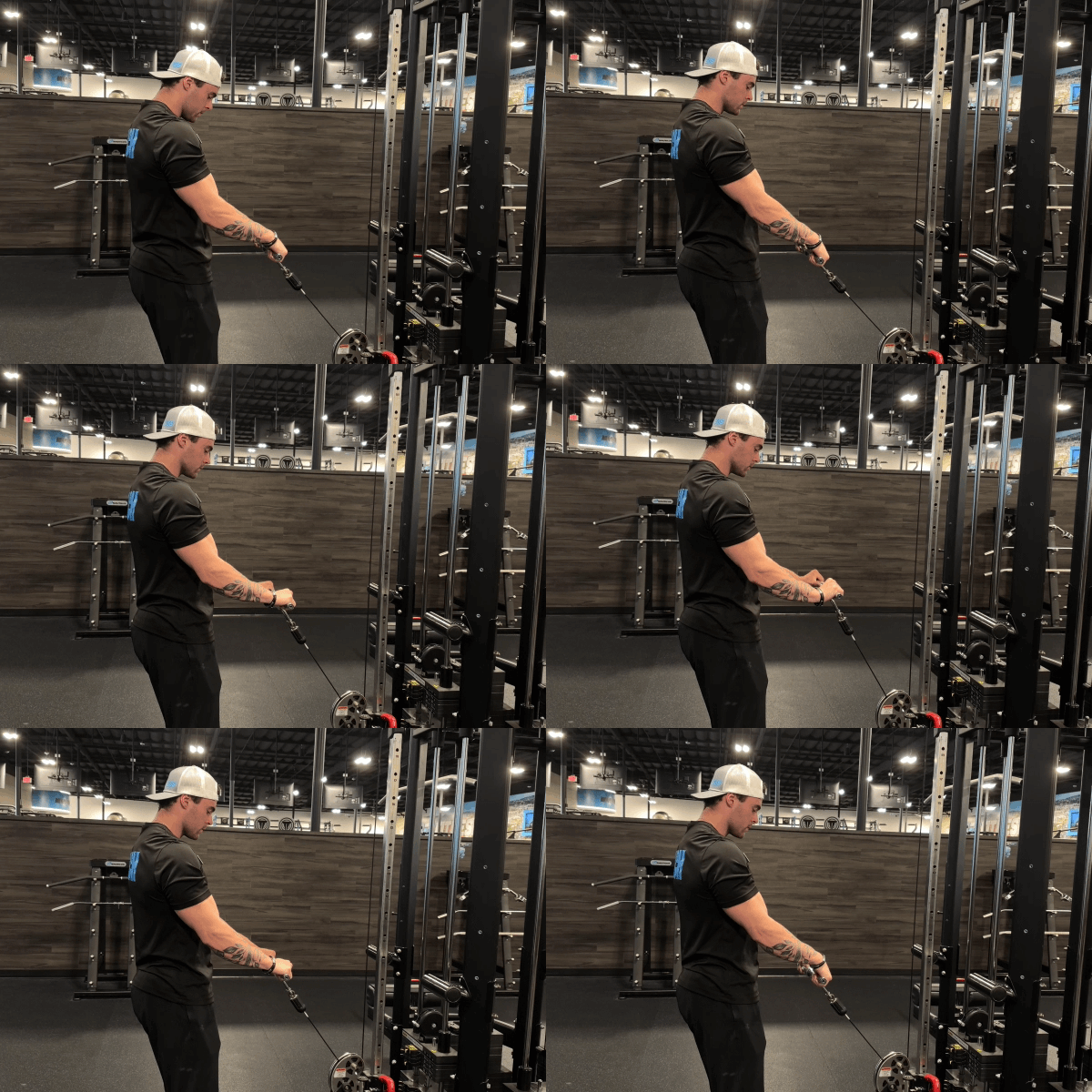
Wrist rollers offer a challenge for your forearm flexors and extensors. If your gym has the equipment, it’s a fantastic forearm-specific option.
How to Perform the Wrist Roller:
- Hold the roller bar out in front of you with both hands, arms roughly parallel to the floor
- Roll the weight up by rotating the bar toward you, one wrist at a time
- Once it reaches the top, slowly reverse the motion to lower it
- Rest, then repeat
Recommended Reps: 2-3 sets of 2-3 full roll-ups and roll-downs
Rolling the bar toward you emphasizes the top of your forearms, while rolling it away targets the underside. Alternate directions between sets and start with a light weight, since holding your arms out in front of you also engages your shoulders.
7. Cable Wrist Curl
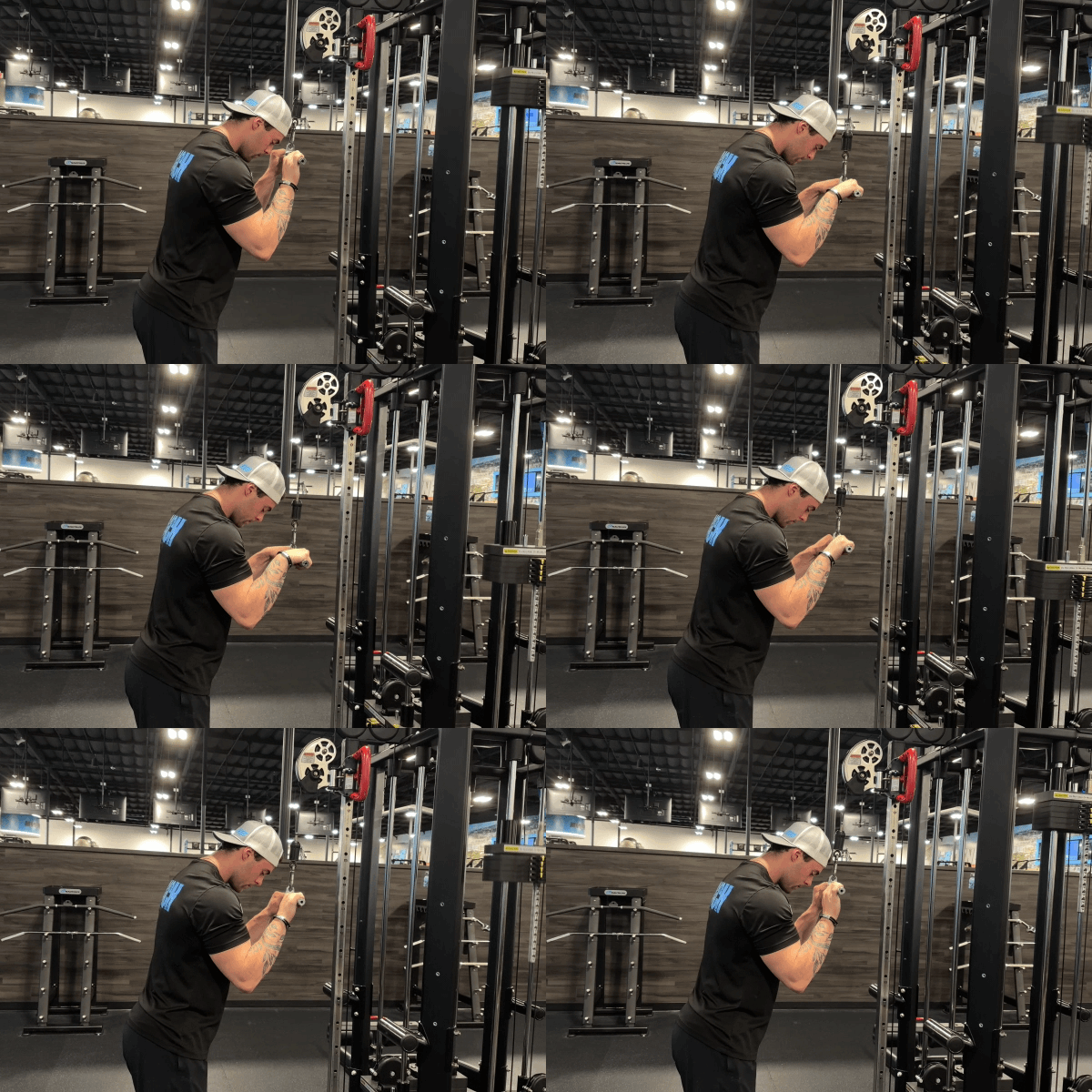
Performed at a cable machine, this move provides resistance throughout the movement and lets you adjust resistance easily, making it useful for progressive overload.
How to Perform the Cable Wrist Curl:
- Attach a straight bar to a low cable pulley
- Sit or kneel facing the cable stack and rest your forearms on your thighs or a bench with your palms facing up.
- Curl the bar upward using only your wrists
- Lower it back down slowly against the cable’s resistance
Recommended Reps: 2-3 sets of 12-15 reps
The adjustable weight stack makes it easy to progress in small increments.
8. Plate Pinch Hold
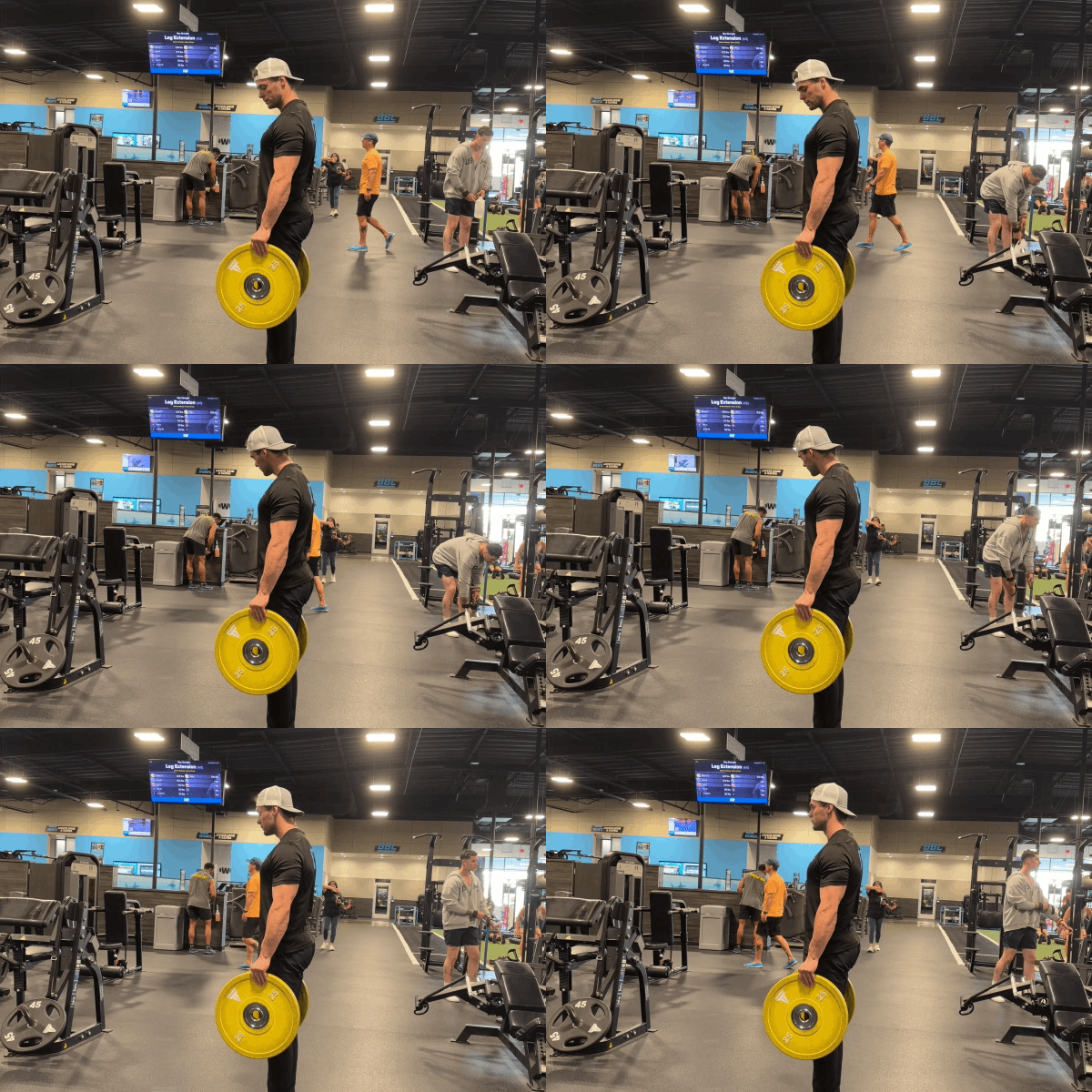
Pinch a manageable weight plate (or two) between your thumb and fingers and hold for a set amount of time. It trains pinch grip, which most curls and carries don’t target directly, making it a great way to round out your forearm routine.
How to Perform the Plate Pinch Hold:
- Pinch a weight plate between your thumb and fingers. If using two plates, press them together with the smooth sides facing out.
- Stand tall and let your arm hang at your side. Keep the plate at your side and away from your feet in case it slips.
- Hold for the set time without letting the plate slip
- Lower it, rest, then switch hands
Recommended Sets: 2-3 sets, holding 20-30 seconds per hand
Start with a lighter plate and work up as your grip improves.
If you’re newer to lifting and want help dialing in your technique, you can take advantage of personal training at your local EōS gym.
HOW TO BUILD A FOREARM WORKOUT
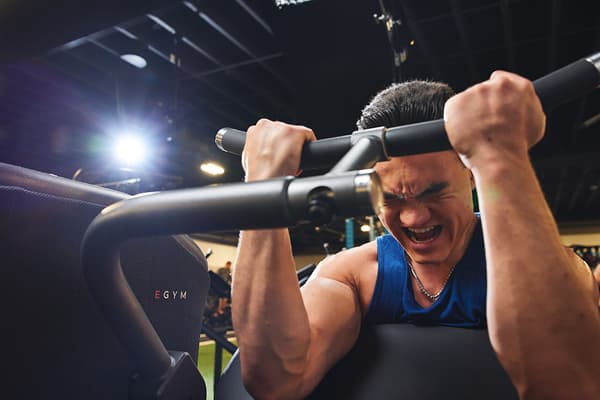
Knowing the exercises is one thing. Knowing how to train your forearms in a way that fits your routine is another. The good news is you don’t need to do every exercise in a single session.
A balanced forearm workout can include two to four exercises that work your forearms in different ways, such as a flexor exercise, an extensor exercise and a grip-focused hold.
If you’re a beginner in strength training, start with lighter resistance and focus on control before chasing heavier weight. Then gradually increase your resistance, reps or hold time as your strength improves. The best workouts to strengthen forearms cover more than one function rather than repeating the same curl.
As a starting point, beginners can try one to two sets of 8–12 controlled reps. For carries and holds, start with 15–30 seconds and adjust based on your grip strength and comfort level.
Keep in mind that your forearms already get plenty of work during compound lifts like rows, deadlifts, pull-ups and carries, so direct forearm training simply complements those bigger movements. At EōS, you’ll find free weights, cable machines and strength equipment to support a variety of forearm exercises.
Ready to build a strength training routine that works for you? Get started with personal training at EōS Fitness. New members can also take advantage of a Welcome Workout for personalized guidance and start working toward their fitness goals.
HOW TO GET BIGGER AND STRONGER FOREARMS
If size and strength are your goals, the same principles that build any muscle apply here. Building muscle takes consistent training, gradual progression and adequate recovery.
- Focus on progressive resistance training, meaning you gradually have your muscles do more over time.
- Stay consistent, since forearms respond to regular, repeated effort rather than the occasional hard session.
- Train different forearm muscles and functions, so you develop the whole area, not just one part.
Grip exercises like holds and carries, along with controlled wrist curls, can help develop forearm strength. Compound lifts like deadlifts and rows also challenge your grip. Support your training with adequate nutrition and recovery, which are also important parts of a muscle-building routine.
HOW OFTEN TO TRAIN YOUR FOREARMS
How often you should train your forearms depends on your overall routine, experience level and recovery. Since your forearms already get indirect work from rows, deadlifts, pull-ups and carries, they usually don’t need direct training every single day.
Most beginners can start with one to two dedicated forearm sessions per week, then adjust based on how their bodies recover. Space those sessions out rather than training forearms hard on back-to-back days, and gradually increase your resistance, reps or hold time as your strength improves. Pay attention to your body, too. Soreness, lingering fatigue or a weaker-than-usual grip may indicate that your muscles need more recovery time.
TRAIN YOUR FOREARMS AND MORE AT EōS FITNESS
Whether you’re chasing grip strength, forearm size or stronger wrists, EōS has what you need. Our gyms offer free weights, cable machines and strength equipment so you can build a forearm workout that fits your goals and experience level.
If you’d like additional guidance, EōS certified trainers can provide personalized guidance. Through personal training, you’ll get a plan built around your goals and expert eyes on your form. New members can also start with a free Welcome Workout, a one-hour session with a certified trainer to help you get comfortable.
Want to see the gym first? Grab a Free 7-Day Gym Trial to find the location nearest you.
FAQS ABOUT FOREARM EXERCISES
How do I get bigger forearms?
To get bigger forearms, focus on progressive resistance training, train different forearm muscles and functions and stay consistent. Pairing direct forearm work with an overall strength routine, good nutrition and recovery gives your muscles what they need to grow, though genetics also play a role in how your forearms look.
How can I increase my forearm strength?
To increase your forearm strength, you should focus on building grip and wrist strength through carries, holds and controlled curls, and gradually increase the difficulty over time. Compound lifts like deadlifts, rows and pull-ups build forearm strength too.
Do bicep curls help forearms?
Bicep curls can help strengthen forearms while also building muscle in your upper arms. Curl variations like hammer curls and reverse curls involve the brachioradialis and forearm muscles, so they give your forearms real work in addition to your biceps. For more arm-focused ideas, check out our best bicep exercises at the gym.
Do push-ups work your forearms?
Push-ups mainly target your chest, shoulders and triceps, but your forearms do help stabilize your wrists and support the movement. They’re not a substitute for direct forearm training, though they can help challenge your wrist stability.