

Isometric Exercises for Beginners
Fitness Tips
May 18, 2026 • 7min read
Isometric exercises are an effective way to build strength, especially for beginners or anyone seeking low-impact training options. The primary goal of isometric exercises is to help you develop muscle control and endurance without complex movements or heavy weights.
Here’s what you need to know about isometric exercises, how they work and how you can safely use isometric holds to build strength as part of a balanced workout routine.
WHAT IS AN ISOMETRIC EXERCISE?
An isometric exercise is a form of strength training where your muscles contract without visibly moving your joints. Instead of lifting or lowering a weight, you hold a static position and maintain muscle tension for a set duration.
This kind of muscle action is called isometric contraction. Common examples of these contractions include holding a plank, sitting in a wall sit or pausing at the bottom of a squat. Even though there’s no movement, your muscles are actively working to resist gravity or external force.
Isometric movements are different from traditional exercises like squats or push-ups, which involve lifting (concentric) and lowering (eccentric) phases. With isometric training, the workout focuses on holding tension and stability rather than moving through a specific motion.
Common Isometric Exercise Examples
Popular isometric exercise examples include:
- Planks and side planks
- Wall sits
- Static lunges
- Hollow body holds
- Push-up holds
These isometric holds are easy to scale and modify according to your individual fitness goals.
ISOMETRIC EXERCISES VS. DYNAMIC EXERCISES
When planning your workout routine, it’s important to understand the difference between dynamic and isometric training. Both exercises are important for any balanced workout routine and aim to build strength; they just have different ways of getting there.
These differences include:
- Isometric exercises: Improve stability, endurance and muscle activation.
- Dynamic exercises: Build strength through movement and support muscle growth.
For beginners starting their fitness journey, isometric movements can help build control and confidence before progressing to more complex lifts.

DO ISOMETRIC EXERCISES BUILD MUSCLE?
Isometric exercises build muscle and are a great entry point into strength training, but they are limited in their ability to maximize muscle growth.
Isometric exercises build strength through sustained muscle tension. Sustaining this muscle tension improves muscular endurance, joint stability and neuromuscular control. If you’re new to the fitness world, isometric training is especially effective because it helps establish a strong foundation before progressing to dynamic or heavier lifting.
However, isometric exercises are generally less effective for maximizing muscle growth than full-range resistance training. For this reason, they work best when combined with traditional workouts rather than used as a replacement.
THE BEST ISOMETRIC EXERCISES BY MUSCLE GROUP
Another key benefit of isometric training is that it can target nearly every major muscle group in your body. If you want to focus on strengthening your lower body or growing your arms, an isometric training workout can help.
Try these beginner-friendly options, separated into upper, lower and full-body exercises:
Upper Body Isometric Holds
Level up your arm day with an isometric exercise workout.
These isometric arm exercises and isometric back exercises help build strength, improve stability and reinforce posture. Isometric movements are especially useful for beginners because they focus on controlled tension without heavy weights, making them low-impact yet effective.
Isometric Bicep Curl
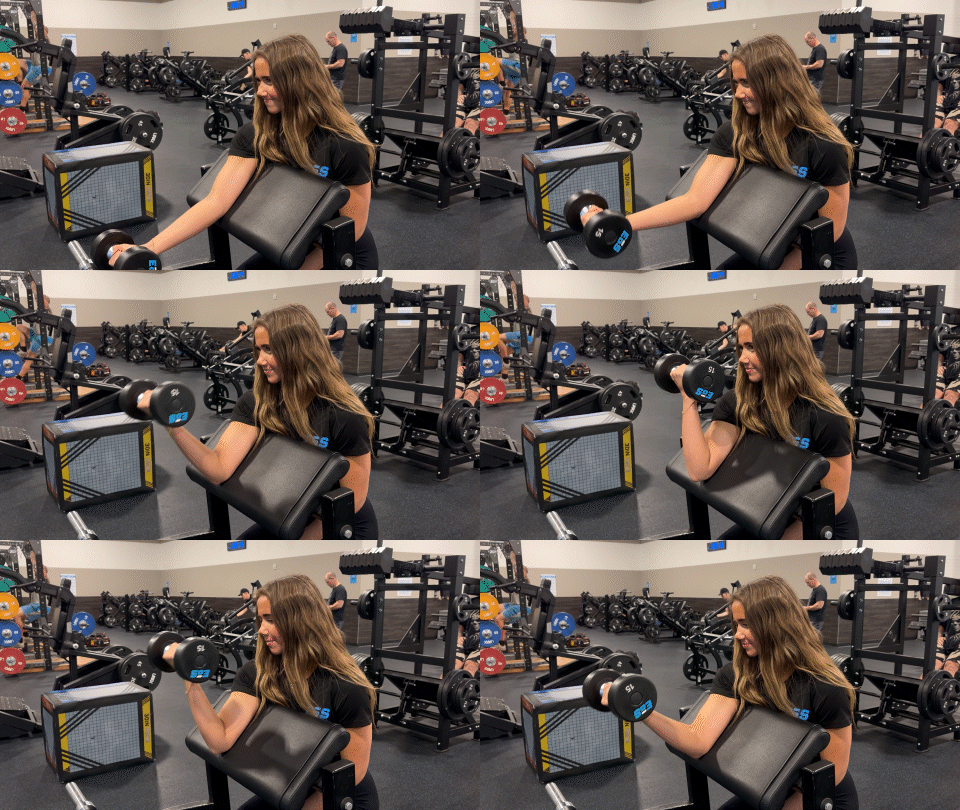
Hold a dumbbell halfway through a curl, maintaining tension in the biceps.
- Benefits: Strengthens the biceps and forearms while improving muscular endurance.
- Tips: Squeeze your biceps throughout the hold and keep your elbows tucked close to your torso.
- Recommended Hold: 15–30 seconds per set, 2–3 sets.
Isometric Wall Push/Wall Press

Press against a wall as if performing a push-up, engaging your chest, shoulders and triceps.
- Benefits: Enhances upper-body strength and stability, particularly in the shoulders and reinforces proper plank posture.
- Tips: Keep your shoulders down and back, core tight and hands pressing firmly into the wall.
- Recommended Hold: 20–30 seconds, 2–3 sets.
Dead Hangs
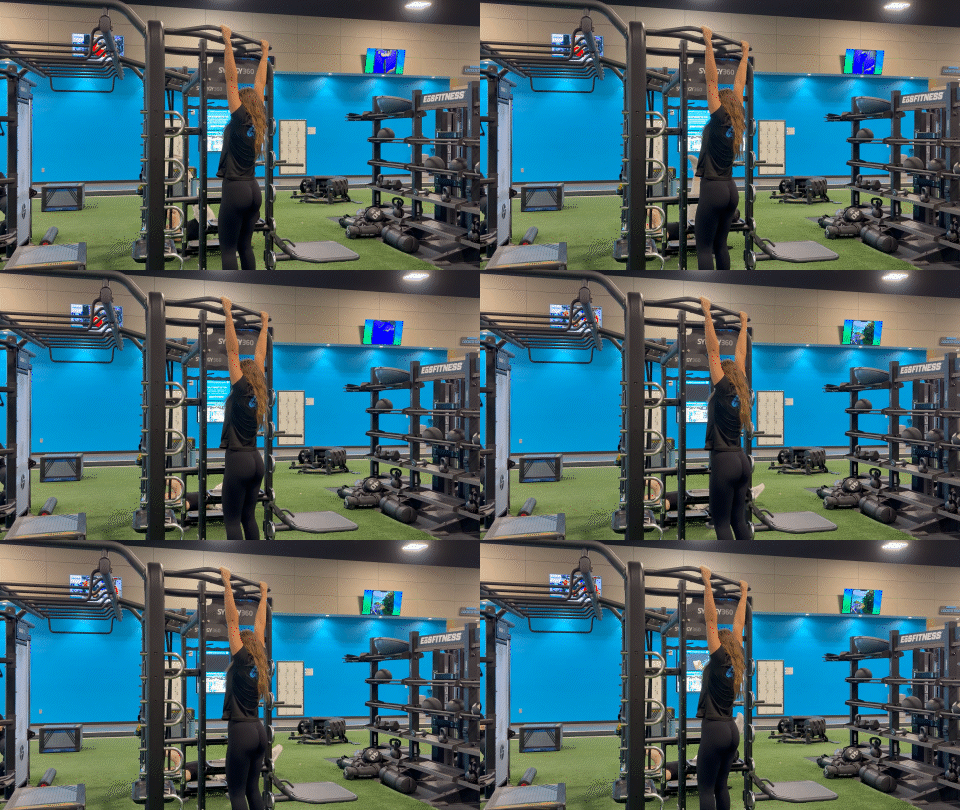
Hang from a pull-up bar, holding your body weight with straight arms.
- Benefits: Strengthens grip, shoulders and upper back while decompressing the spine.
- Tips: Engage your shoulder blades by slightly pulling them down and together. Keep your core tight throughout the hold.
- Recommended Hold: 15–45 seconds, 2–3 sets.
Lower Body Isometric Holds
These isometric leg exercises target the quads, hamstrings, calves and glutes, improving strength and endurance while remaining low-impact. Isometric lower-body movements are effective for building stability and reinforcing proper alignment.
Wall Sit
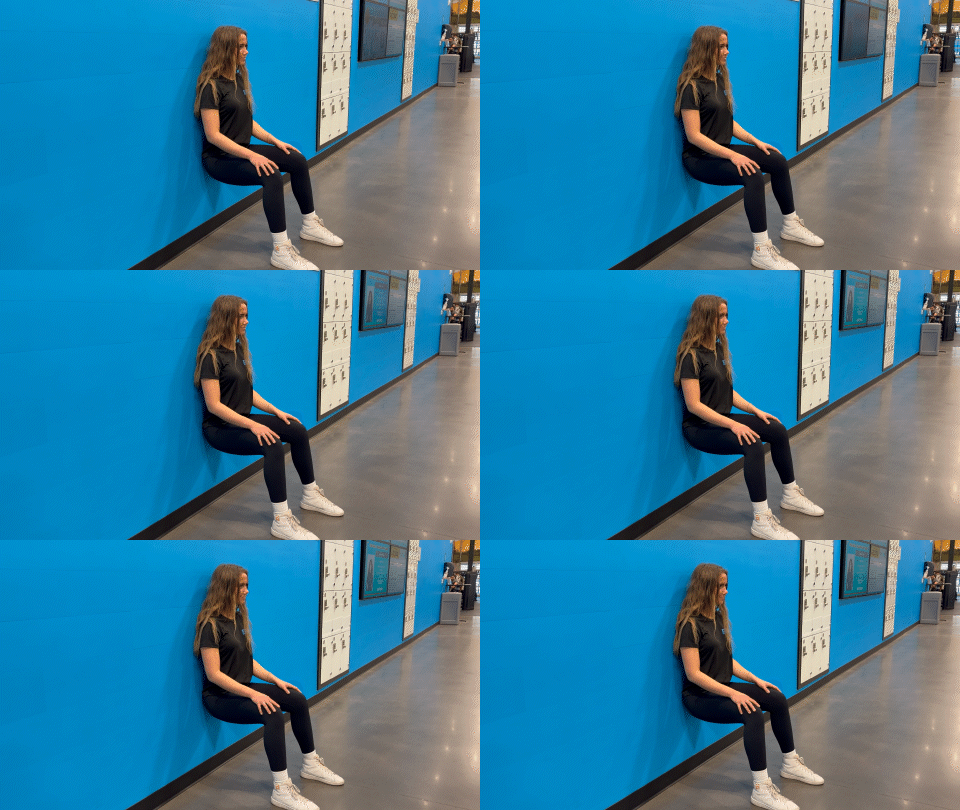
Sit against a wall with your knees at 90 degrees, keeping your back flat.
- Benefits: Strengthens the quadriceps, hamstrings and glutes, improving lower-body endurance.
- Tips: Press your heels into the floor, engage your core and keep your back flat against the wall.
- Recommended Hold: 20–45 seconds, 2–3 sets.
Isometric Lunge Hold/Split Squat Hold
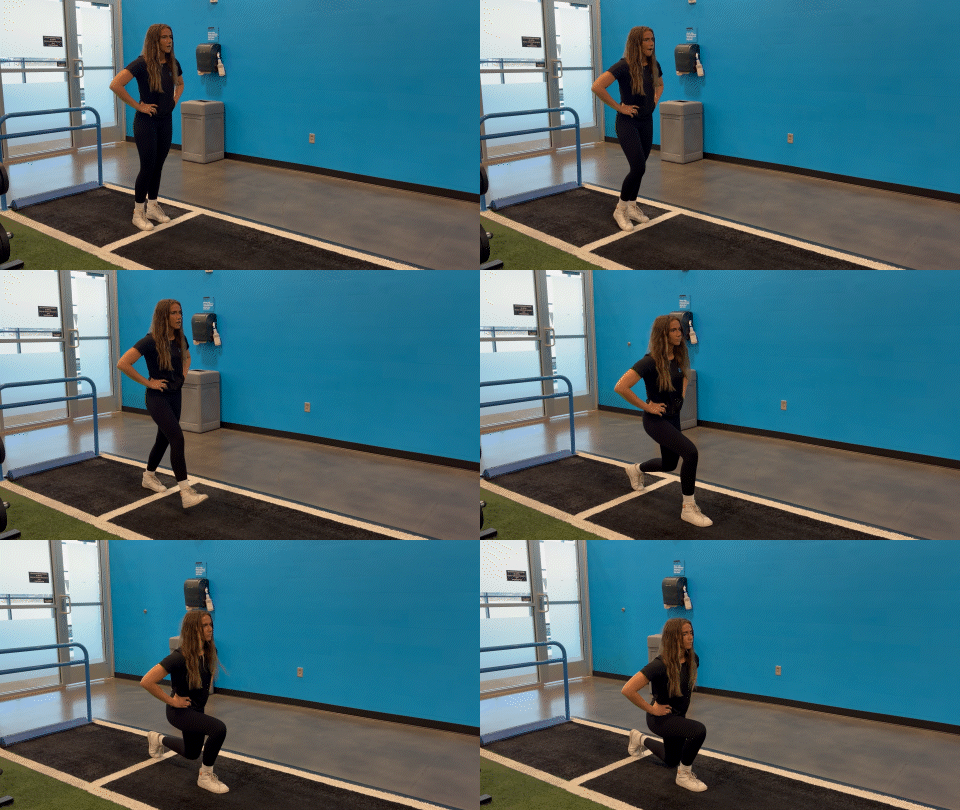
Step into a lunge position and hold.
- Benefits: Strengthens the quads, glutes and hamstrings while improving balance and hip stability.
- Tips: Keep your front knee above your ankle, your back knee hovering just above the floor and your core engaged.
- Recommended Hold: 15–30 seconds per leg, 2–3 sets.
Glute Bridge Hold
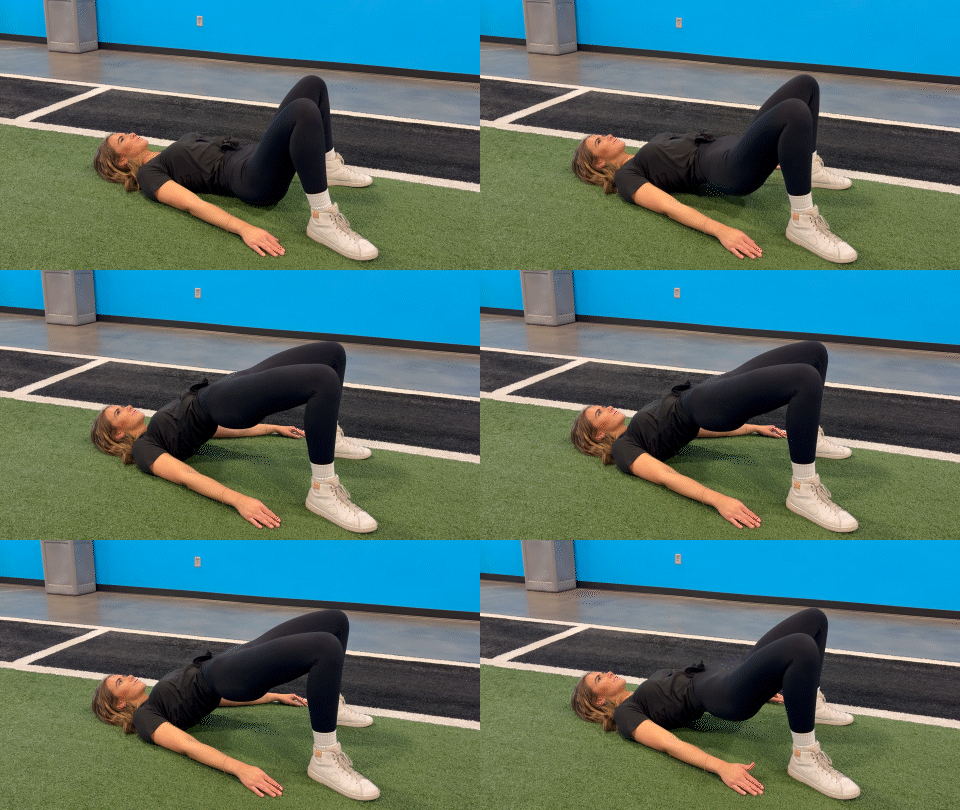
Lift your hips and squeeze your glutes while holding at the top.
- Benefits: Activates the glutes and hamstrings, supporting lower-back health and hip stability.
- Tips: Press your heels into the floor, squeeze your glutes at the top and keep your core tight.
- Recommended Hold: 15–30 seconds, 2–3 sets.
Full Body Isometric Holds
These full-body isometric exercises combine upper and lower-body engagement, helping improve overall stability, core strength and posture.
Hollow Body Hold
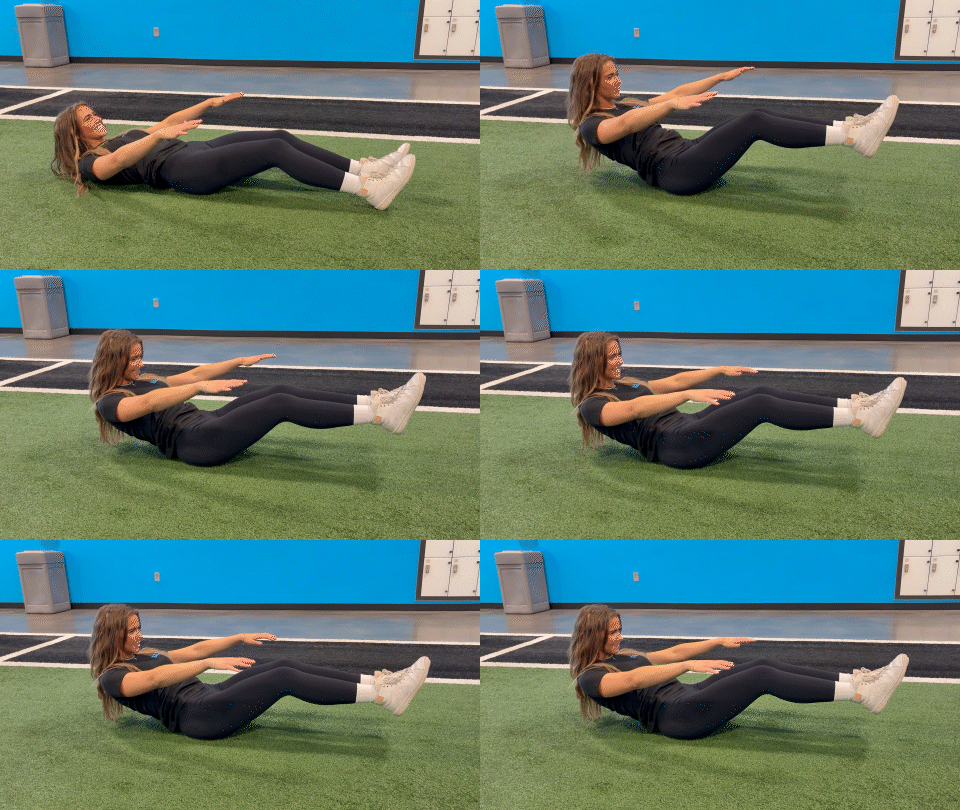
Lie on your back, lift your legs and shoulders off the ground, keeping your lower back pressed into the floor.
- Benefits: Strengthens the core, hip flexors and lower back while improving body control.
- Tips: Engage your abs and glutes simultaneously. Reach your arms overhead for added tension.
- Recommended Hold: 15–30 seconds, 2–3 sets.
Straight Arm Plank Hold
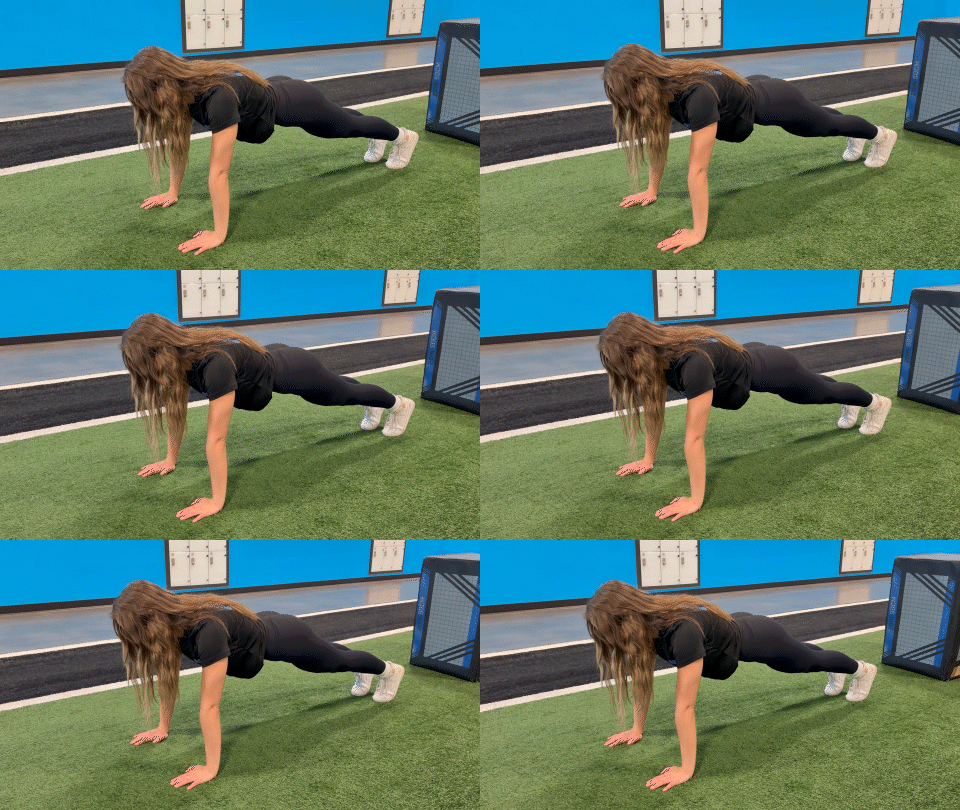
Maintain a plank position on your hands, focusing on shoulder stability and core engagement.
- Benefits: Strengthens the shoulders, chest, core and stabilizer muscles to improve posture.
- Tips: Keep shoulders over wrists, core tight and back flat. Avoid sagging or raising your hips.
- Recommended Hold: 20–45 seconds, 2–3 sets.
Superman Hold
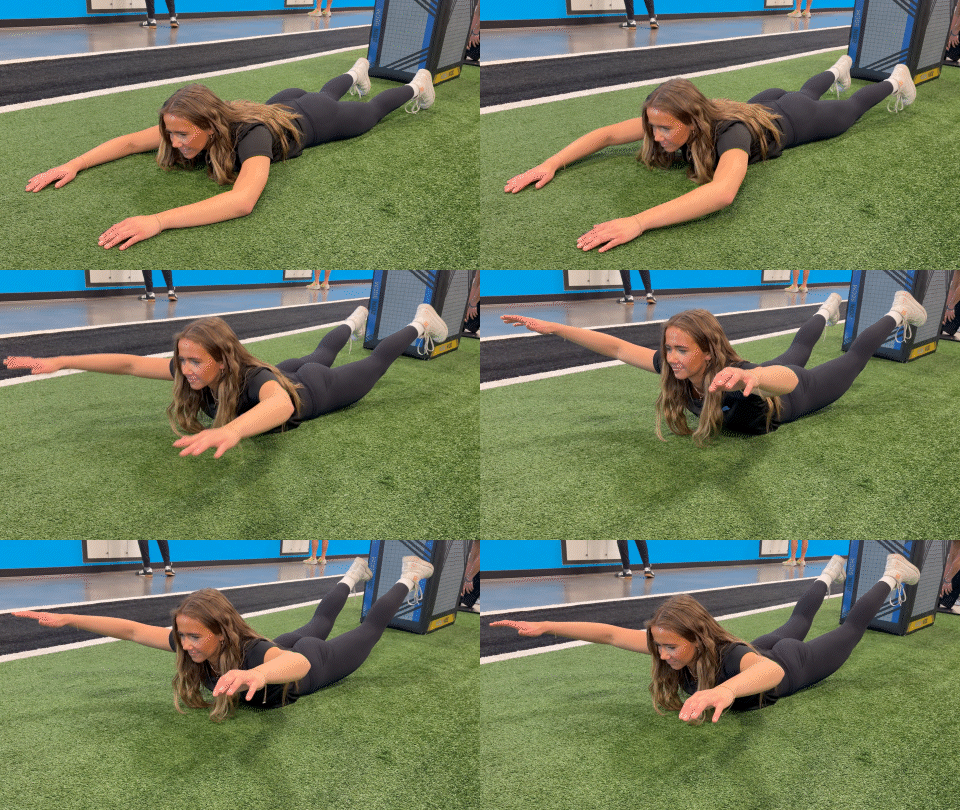
Lie face down and lift your arms and legs slightly off the floor, engaging the back and glutes.
- Benefits: Strengthens the posterior chain, including lower back, glutes and shoulders, enhancing posture and spinal stability.
- Tips: Lift arms and legs evenly, engage glutes and upper back and avoid arching excessively.
- Recommended Hold: 15–30 seconds, 2–3 sets.
BENEFITS OF ISOMETRIC EXERCISES FOR BEGINNERS
Isometric exercises offer many benefits for beginners because they are simple to perform and easy to incorporate into any workout routine.
Some of the advantages of isometric exercise include:
- Low-impact training: Minimal joint movement makes isometric exercises easier on the knees, hips and shoulders.
- Improved muscle endurance: Holding positions builds stamina and strength over time.
- Enhanced stability: Isometric holds strengthen stabilizer muscles that support posture and balance.
- Accessible and scalable: Many isometric exercises require little to no equipment.
- Great for practicing learning form: Static positions help beginners focus on proper alignment and muscle engagement.
Ultimately, isometric exercise benefits beginners by helping them build strength safely and consistently.
BUILD STRENGTH AT YOUR PACE WITH ISOMETRIC TRAINING
Isometric exercises offer a practical, low-impact way to build strength, improve endurance and develop better muscle control. No matter your reason for adding isometric training to your routine, it provides a strong foundation for long-term progress.
At EōS Fitness, you’ll find the space, equipment and support needed to train confidently as you begin your fitness journey. Try out our gym with our 7-Day Free Trial, or work with one of our Personal Trainers to take your isometric workout routine to the next level.
FREQUENTLY ASKED QUESTIONS ABOUT ISOMETRIC EXERCISES
What is an isometric contraction?
An isometric contraction occurs when a muscle generates force without changing length, such as holding a plank or a wall sit.
Are isometric exercises safe for beginners?
Isometric exercises are safe for beginners when done with proper form and appropriate hold times. In fact, these exercises are great for anyone interested in low-impact workouts or recovering from an injury.
How often should beginners do isometric training during their workout?
Beginners can include isometric exercises in their workout 2–4 times per week.
How Long Should You Hold Isometric Exercises?
When just starting, it’s best to hold isometric exercises for around 10 to 30 seconds per set. As you improve your strength, gradually increase the hold time to 45–60 seconds or incorporate additional resistance.
With isometric exercises for beginners, a good rule of thumb is:
- 2–3 sets per exercise
- 30–60 seconds of rest between holds
- Focus on quality form over longer hold times