
Dynamic vs Static Stretching: Differences & When to Use Each
Fitness Tips
Feb 26, 2026 • 5min read
Stretching is a key part of any fitness journey, but it can be difficult to know when and how to stretch.
Understanding static and dynamic stretching can make all the difference between an effective workout and a training setback. This article will break down the difference between the two so you can maximize your workouts, protect your muscles and stay strong.
UNDERSTANDING THE IMPORTANCE OF STRETCHING
Let’s start with the basics: What even is stretching?
Stretching helps lengthen your muscles and move your joints through their full range of motion. This improves flexibility, mobility and helps reduce your risk of injury.
In general, stretching helps:
- Increase range of motion
- Improve circulation and muscle elasticity
- Reduce muscle stiffness and tightness
- Support better posture and movement efficiency
Now it’s time to dive into the two different types: dynamic stretching and static stretching.
WHAT IS DYNAMIC STRETCHING?
Dynamic stretching involves controlled, active movements that take your muscles and joints through their full range of motion. Dynamic stretches mimic the movements you’ll perform in your workout, helping your body get warm and gradually prepare for the workout ahead.
Benefits of Dynamic Stretching
There are many benefits of dynamic stretching, including:
- Increasing blood flow to working muscles
- Enhancing joint mobility and coordination
- Activating muscles before exercise
- Reducing stiffness and preparing your body for high-intensity movement
When Should You Use Dynamic Stretching?
Perform dynamic stretching before your workouts, especially when strength, speed or coordination are involved.
Other times, you might want to include dynamic stretching:
- Before weight training
- Before running or cycling
- Before HIIT workouts
- At the start of sports or group fitness classes
A proper dynamic warm-up helps prime muscles and joints for movement, improving performance and reducing the risk of strains.
Dynamic Stretching Exercises
If you have an extra 5-10 minutes and want to add some dynamic stretching exercises to your warm-up, try:
- Arm circles
- Leg swings (forward, backward and side-to-side)
- Walking lunges
- High knees
- Torso twists

WHAT IS STATIC STRETCHING?

Now it’s time to dive into static stretching.
Static stretching involves holding a muscle in a lengthened position for 15 to 60 seconds. When compared to dynamic stretches, static stretches are slow and stationary, focusing on relaxing and elongating the muscle rather than activating it.
Benefits of Static Stretching
Static stretching offers recovery-focused benefits, such as:
- Improved long-term flexibility
- Reduced muscle tightness after exercise
- Enhanced relaxation and stress relief
- Support for posture and muscle balance
- Maintains long-term joint health and mobility
When Should You Use Static Stretching?
Static stretching is most effective after a workout or during recovery sessions, when your muscles are warm and pliable.
You should use static stretching:
- After strength training or cardio
- During a cool down
- On active recovery days
- As part of flexibility or mobility sessions
Static stretching after a workout reduces muscle tightness and promotes relaxation, so you can enjoy the benefits of working out without pain.
Static Stretching Examples
If you need to add a more structured post-workout routine, some common static stretching examples include:
- Hamstring stretch
- Quadriceps stretch
- Calf stretch
- Shoulder stretch
- Seated spinal twist
WHAT IS THE DIFFERENCE BETWEEN STATIC AND DYNAMIC STRETCHING?
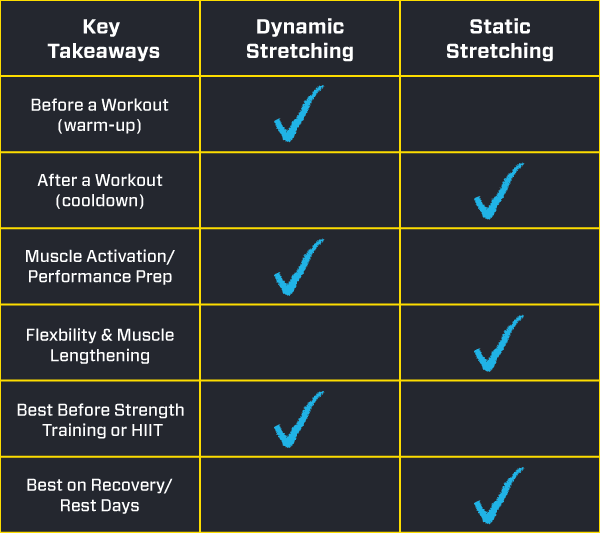
The main difference between dynamic and static stretching is how the muscles are used and when each should be performed. Dynamic stretching increases muscle responsiveness and range of motion, making it ideal for warm-ups. Static stretching temporarily reduces muscle tension, making it a better fit for cooldowns and recovery rather than performance preparation.
The difference between static and dynamic stretching can generally be summed up as:
Dynamic Stretching
Movement Style: Involves continuous, controlled movement
Muscle Effect: Activates muscles and joints
Best Time To Do It: Before workouts
How Long: ~30–60 sec per movement or 8–12 reps
Main Benefit: Prepares the body for activity
Static Stretching
Movement Style: Involves holding a stretch position
Muscle Effect: Relaxes and lengthens muscles
Best Time To Do It:After workouts or during recovery
How Long: ~15–60 sec holds
Main Benefit: Supports recovery and flexibility
COMMON STRETCHING MISTAKES TO AVOID
While knowing the differences between static and dynamic stretching is important, you should also learn how to stretch correctly. Even with the right intentions, stretching mistakes are common.
When you’re stretching, make sure to avoid:
- Performing static stretching before intense workouts
- Bouncing or forcing stretches beyond comfort
- Skipping warm-ups entirely
- Ignoring signals of pain or discomfort
When done properly, stretching should feel controlled and purposeful, not painful.
If you aren’t sure where to start, consider signing up for an assisted stretching program to better understand proper movements.
DYNAMIC VS. STATIC STRETCHING: WHICH IS RIGHT FOR YOU?
The answer depends on your goals and timing. If you are preparing to exercise, dynamic stretching is the better choice. If you are recovering or working on flexibility, static stretching may be the better fit for you. For the most part, your fitness routine will benefit from both stretching methods.
Understanding the difference between static and dynamic stretching can significantly improve your workout quality and recovery. And at EōS Fitness, our Assisted Stretch Program (available only at select locations) helps you combine dynamic and static stretching into a routine that fits your fitness goals.
Ready to get started? Take advantage of our Free 7-Day Trial to experience everything EōS location near you has to offer.

DYNAMIC VS. STATIC STRETCHING FAQs
What is the main difference between dynamic stretching vs. static stretching?
The main difference is that dynamic stretching uses controlled movement to prepare your muscles, while static stretching involves holding a stretch to relax and lengthen your muscles.
Is dynamic stretching better than static stretching?
Dynamic stretching is not better than static stretching, as both serve different purposes. Dynamic stretching works best before working out, while static stretching is more effective post- exercise for recovery.
Can I combine dynamic and static stretching in one routine?
Dynamic and static stretching can be combined in one routine. A balanced stretching routine typically includes dynamic stretching before exercise and static stretching after exercise.
Do I still need to stretch if I don’t feel tight?
You should still stretch even if you don’t feel tight, since regularly performing static and dynamic stretches helps maintain your mobility and joint health.
What happens if I skip stretching altogether?
Skipping stretching can lead to muscle stiffness, reduced range of motion and an increased risk of strains or discomfort. Incorporating dynamic and static stretching into your workouts can improve performance and recovery.